R.E.M. was an American rock band formed in Athens, Georgia, in 1980 by drummer Bill Berry, guitarist Peter Buck, bassist Mike Mills, and vocalist Michael Stipe. The group emerged from the local music scene while its members were associated with the University of Georgia. The band's sound was characterized by Buck's arpeggiated guitar style, Stipe's distinctive vocals and lyrics, Mills's melodic bass playing and backing vocals, and Berry's restrained drumming. R.E.M. became one of the most influential and commercially successful alternative rock bands, selling more than 90 million records worldwide before disbanding in 2011.
The band's first release was the single "Radio Free Europe" in 1981 on the independent label Hib-Tone. It was followed by the EP "Chronic Town" in 1982, released through I.R.S. Records. During the 1980s, R.E.M. established a growing audience through extensive touring and support from college radio stations. The group's early albums included "Murmur" (1983), "Reckoning" (1984), "Fables of the Reconstruction" (1985), "Lifes Rich Pageant" (1986), and "Document" (1987). The single "The One I Love" became the band's first major mainstream hit. In 1988, R.E.M. signed with Warner Bros. Records and released "Green", expanding its international profile.
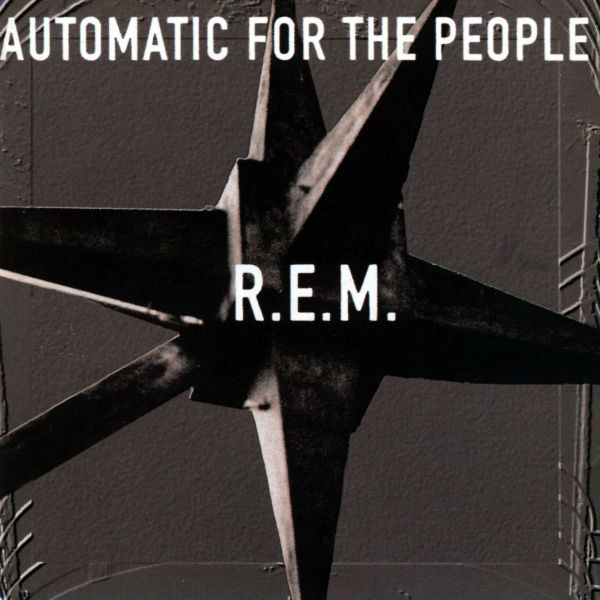
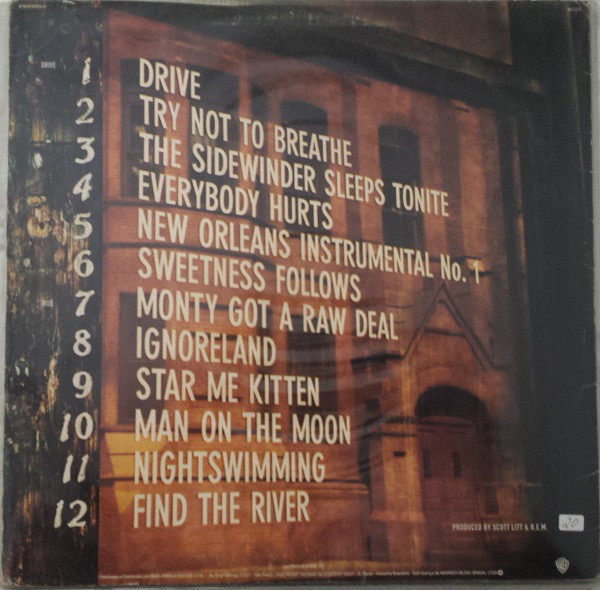
The band's commercial peak came with "Out of Time" (1991) and "Automatic for the People" (1992). "Out of Time" produced the hit single "Losing My Religion", which became the group's highest-charting and best-selling single, while "Automatic for the People" featured songs such as "Drive", "Man on the Moon", and "Everybody Hurts". The follow-up album "Monster" (1994) continued the band's commercial success and was supported by its first major tour in six years.
In 1996, R.E.M. renewed its contract with Warner Bros. Records in a deal widely reported as one of the largest recording contracts in music industry history at the time. The album "New Adventures in Hi-Fi" was recorded largely during the "Monster" tour and was released the same year. In 1997, Bill Berry left the band after health concerns and a desire to retire from touring and recording. The remaining members continued as a trio, working with a number of additional studio and touring musicians, including Scott McCaughey, Ken Stringfellow, Joey Waronker, and Bill Rieflin.
Following Berry's departure, R.E.M. explored new musical directions on albums such as "Up" (1998) and "Reveal" (2001). The band later released "Around the Sun" (2004), "Accelerate" (2008), and "Collapse into Now" (2011). During this period, commercial and critical reception varied, although the group remained internationally successful.
R.E.M. was inducted into the Rock and Roll Hall of Fame in 2007 during its first year of eligibility. Bill Berry reunited with the band for the induction ceremony and participated in a recording of John Lennon's "#9 Dream" for the compilation album "Instant Karma: The Amnesty International Campaign to Save Darfur".
On September 21, 2011, R.E.M. announced that it was ending its career as a band. The members stated that the decision was made collectively and amicably. Before disbanding, they released the retrospective compilation "Part Lies, Part Heart, Part Truth, Part Garbage 1982-2011".
The origins of R.E.M. date to January 1980, when Peter Buck met Michael Stipe at Wuxtry Records in Athens. Discovering shared interests in punk rock and related genres, they joined with Bill Berry and Mike Mills, who had previously played music together in Macon, Georgia. After rehearsing in a former church building and other locations in Athens, the group performed its first concert on April 5, 1980. Several names were considered before the band adopted the name R.E.M., reportedly selected by Stipe from a dictionary.
The band quickly gained a following in Athens and throughout the southern United States. Manager Jefferson Holt joined the group early in its career and helped organize extensive touring. In 1981, R.E.M. recorded and released "Radio Free Europe", which received positive critical attention despite its limited distribution.
After signing with I.R.S. Records, the band recorded "Chronic Town" and subsequently released "Murmur", which received widespread critical acclaim and established R.E.M. as a leading act in the emerging college rock movement. "Reckoning" followed in 1984, while "Fables of the Reconstruction" was recorded in London with producer Joe Boyd. The latter album marked a stylistic shift and incorporated themes associated with Southern Gothic storytelling.
"Lifes Rich Pageant" (1986), produced by Don Gehman, increased the band's commercial visibility, aided by the single "Fall on Me". The compilation "Dead Letter Office" and the video collection "Succumbs" followed. Producer Scott Litt began working with the band on "Document" (1987), which featured politically themed songs including "Welcome to the Occupation" and "Exhuming McCarthy". The album's success helped establish R.E.M. as a major rock act.
The move to Warner Bros. Records led to the release of "Green" (1988), which incorporated a wider variety of musical styles and expanded the band's audience internationally. Following a brief hiatus, R.E.M. recorded "Out of Time", which topped album charts in both the United States and the United Kingdom. The success of "Losing My Religion" brought the band unprecedented mainstream exposure.
"Automatic for the People" followed in 1992 and explored themes of mortality, loss, and adulthood. It became one of the band's most successful and enduring releases. "Monster" (1994) represented a return to a louder and more guitar-oriented sound. During the accompanying tour, Berry suffered a brain aneurysm, while Mills and Stipe also experienced health issues, though all recovered.
"New Adventures in Hi-Fi" (1996) incorporated material developed while touring and was followed by Berry's departure in 1997. The trio's subsequent album, "Up", incorporated electronic and experimental influences. In 1999, the band composed the score for the film "Man on the Moon" and released the single "The Great Beyond".
"Reveal" (2001) featured a more melodic and atmospheric sound, while the compilation "In Time: The Best of R.E.M. 1988-2003" was released in 2003. "Around the Sun" appeared in 2004, followed by a tour featuring drummer Bill Rieflin. In 2006, all four original members reunited for induction into the Georgia Music Hall of Fame.
Following their induction into the Rock and Roll Hall of Fame in 2007, R.E.M. released "Accelerate" in 2008 and "Collapse into Now" in 2011. After the band's breakup, various archival releases and box sets were issued, including "Unplugged: The Complete 1991 and 2001 Sessions" and "R.E.M. at the BBC".
Former members continued to collaborate occasionally after the band's dissolution. Michael Stipe repeatedly stated that a permanent reunion was not planned. In 2024, R.E.M. was inducted into the Songwriters Hall of Fame. To mark the occasion, all four founding members performed "Losing My Religion" together, their first public live performance as a group since 2007. They reunited again in 2025 to perform "Pretty Persuasion" at the 40 Watt Club in Athens, Georgia. Despite these appearances, the members have indicated that a full-scale reunion is unlikely.
Full Wikipedia article: https://en.wikipedia.org/wiki/R.E.M.
Studio albums
Murmur (1983)
Reckoning (1984)
Fables of the Reconstruction (1985)
Lifes Rich Pageant (1986)
Document (1987)
Green (1988)
Out of Time (1991)
Automatic for the People (1992)
Monster (1994)
New Adventures in Hi-Fi (1996)
Up (1998)
Reveal (2001)
Around the Sun (2004)
Accelerate (2008)
Collapse into Now (2011)
Read more on Last.fm. User-contributed text is available under the Creative Commons By-SA License; additional terms may apply.