John Michael "Ozzy" Osbourne (3 December 1948 – 22 July 2025) was an English singer, songwriter, and media personality. Nicknamed the "Prince of Darkness", he was widely regarded as a pioneer of heavy metal music. He co-founded Black Sabbath in 1968 and rose to prominence in the 1970s as the band’s lead vocalist. He appeared on the band’s first eight studio albums, including "Black Sabbath", "Paranoid" (both 1970) and "Master of Reality" (1971), before being dismissed in 1979 due to issues related to alcohol and drug use.
After his departure from Black Sabbath, Osbourne began a solo career in the 1980s, forming a band with guitarist Randy Rhoads and bassist Bob Daisley. This collaboration produced the albums "Blizzard of Ozz" (1980) and "Diary of a Madman" (1981). During the 1980s, he attracted controversy for his onstage and offstage behaviour and was accused by some Christian groups of promoting Satanism. Over his career, Osbourne released thirteen solo studio albums, the first seven of which achieved multi-platinum certification in the United States. He reunited with Black Sabbath on several occasions, including periods from 1997 to 2005 and from 2012 onward. During the latter reunion, he performed on the band’s final studio album, "13" (2013), followed by a farewell tour that concluded in 2017. On 5 July 2025, he performed his final concert at the "Back to the Beginning" event in Birmingham, which he had announced would be his last live performance due to health problems. He had intended to continue recording music as a solo artist, but died 17 days later.
Osbourne sold more than 100 million albums worldwide, including both his solo work and Black Sabbath releases. He was inducted into the Rock and Roll Hall of Fame as a member of Black Sabbath in 2006 and as a solo artist in 2024. He was also inducted into the UK Music Hall of Fame both as a solo artist and with Black Sabbath in 2005. He received a star on the Hollywood Walk of Fame in 2002 and on the Birmingham Walk of Stars in 2007. At the 2014 MTV Europe Music Awards, he received the Global Icon Award, and in 2015 he was awarded the Ivor Novello Award for Lifetime Achievement.
His wife and manager Sharon Osbourne founded the touring festival Ozzfest, which ran annually from 1996 to 2010. In the early 2000s, Osbourne became a reality television personality through "The Osbournes" (2002–2005), which featured his family, followed by "Ozzy & Jack's World Detour" (2016–2018) and "The Osbournes Want to Believe" (2020–2021).
Osbourne was born in Marston Green and grew up in the Aston area of Birmingham. His mother, Lilian, worked in a factory, and his father, John Thomas Osbourne, worked as a toolmaker. He had three older sisters and two younger brothers. He left school at 15 and worked various manual jobs. As a teenager, he was convicted of burglary and spent six weeks in prison. He struggled with dyslexia and later described experiencing bullying and abuse during his school years. He became interested in music after hearing early recordings by the Beatles, later stating that they inspired him to pursue a career as a musician.
In 1967, Geezer Butler formed Rare Breed and recruited Osbourne as vocalist, though the group soon disbanded. Osbourne and Butler later joined Tony Iommi and Bill Ward in Earth, which was renamed Black Sabbath in 1969. The band became associated with a darker style of heavy blues-influenced rock music. Their debut album "Black Sabbath" (1970) and its follow-up "Paranoid" achieved commercial success and significant radio play. "Master of Reality" (1971) also reached high chart positions and later received multiple platinum certifications despite mixed contemporary reviews. Subsequent albums such as "Black Sabbath Vol. 4" (1972), "Sabbath Bloody Sabbath" (1973), "Sabotage" (1975) and "Technical Ecstasy" (1976) showed both commercial success and internal tensions within the band.
Between 1977 and 1978, Osbourne briefly left Black Sabbath to pursue a solo project titled "Blizzard of Ozz", but rejoined the band for the recording of "Never Say Die!" (1978). Following further internal conflict, he was dismissed from Black Sabbath in 1979 and replaced by Ronnie James Dio. He later began developing his solo career after signing with Jet Records.
Osbourne’s debut solo album "Blizzard of Ozz" (1980) marked the beginning of his successful solo career and achieved multi-platinum status. Its follow-up, "Diary of a Madman" (1981), included notable singles such as "Over the Mountain" and "Flying High Again". During this period, guitarist Randy Rhoads became a key collaborator before his death in a plane crash in 1982, an event that led to the cancellation of part of Osbourne’s tour and a period of personal distress. He continued his career with various line-up changes and released further albums including "Bark at the Moon" (1983) and "The Ultimate Sin" (1986).
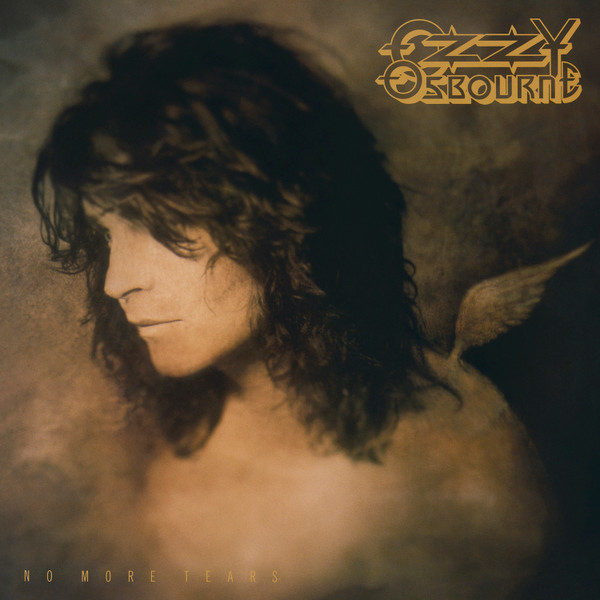
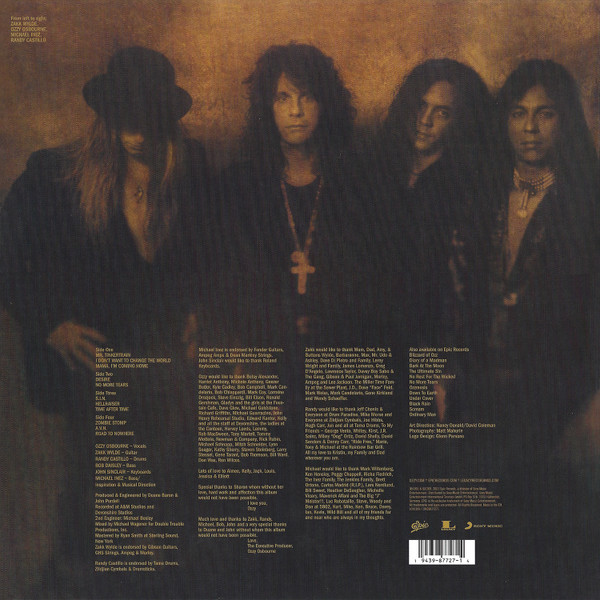
In the late 1980s and early 1990s, Osbourne released "No Rest for the Wicked" (1988) and "No More Tears" (1991), both of which were commercially successful. He collaborated with several musicians, including Zakk Wylde, who became a long-term guitarist in his band. In 1992, he announced a farewell tour titled No More Tours, although he later returned to touring and recording.
In 1996, Ozzfest was created by Sharon Osbourne after unsuccessful attempts to include Osbourne in other major festival tours. The festival became an annual event and helped promote heavy metal acts. In 1997, Osbourne reunited with Black Sabbath for Ozzfest performances, leading to the live album "Reunion" (1998) and subsequent tours.
Osbourne continued releasing solo albums, including "Ozzmosis" (1995), "Down to Earth" (2001), "Black Rain" (2007), "Scream" (2010), "Ordinary Man" (2020) and "Patient Number 9" (2022). He also collaborated with artists such as Post Malone on the song "Take What You Want" (2019), which became a major commercial success.
Black Sabbath reunited again in the 2010s, releasing the album "13" (2013) and undertaking a final farewell tour that ended in 2017. Osbourne later resumed solo touring but suffered health issues, including a spinal injury and Parkinson’s disease, which ultimately ended his touring career.
In 2025, he performed his final concert at Villa Park in Birmingham alongside the original Black Sabbath line-up. He died shortly afterward in Buckinghamshire at the age of 76 from a heart attack, with coronary artery disease and Parkinson’s disease listed as contributing factors.
Osbourne’s career is widely regarded as highly influential in the development of heavy metal music, both through his work with Black Sabbath and his solo output.
Full Wikipedia article: https://en.wikipedia.org/wiki/Ozzy_Osbourne
Studio albums
Blizzard of Ozz (1980)
Diary of a Madman (1981)
Bark at the Moon (1983)
The Ultimate Sin (1986)
No Rest for the Wicked (1988)
No More Tears (1991)
Ozzmosis (1995)
Down to Earth (2001)
Under Cover (2005)
Black Rain (2007)
Scream (2010)
Ordinary Man (2020)
Patient Number 9 (2022)
Read more on Last.fm. User-contributed text is available under the Creative Commons By-SA License; additional terms may apply.