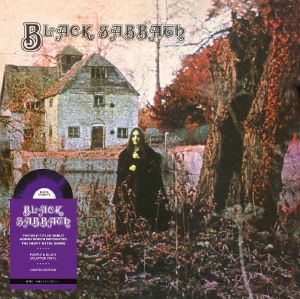
Black Sabbath was an English heavy metal band formed in Birmingham in 1968 by guitarist Tony Iommi, drummer Bill Ward, bassist Geezer Butler, and vocalist Ozzy Osbourne. The band initially performed under the names Polka Tulk Blues Band and later Earth, before adopting the name Black Sabbath in 1969. They became known for lyrical themes influenced by horror and the occult, as well as for the use of down-tuned guitars. Their first three albums, "Black Sabbath" and "Paranoid" (both 1970), and "Master of Reality" (1971), achieved commercial success and are widely cited as foundational works in the development of heavy metal. Subsequent releases, including "Vol. 4" (1972), "Sabbath Bloody Sabbath" (1973), "Sabotage" (1975), "Technical Ecstasy" (1976), and "Never Say Die!" (1978), featured broader stylistic experimentation and elements drawn from progressive rock.
Osbourne was dismissed from the band in 1979 and replaced by former Rainbow vocalist Ronnie James Dio. With Dio, Black Sabbath recorded the albums "Heaven and Hell" (1980) and "Mob Rules" (1981), followed by the live album "Live Evil" (1983). The latter two releases featured drummer Vinny Appice, who replaced Ward. After the departures of Dio and Appice, Iommi and Butler recorded "Born Again" (1983) with Ward returning on drums and Ian Gillan, formerly of Deep Purple, on vocals. By 1984, Butler, Ward, and Gillan had left the band, leaving Iommi as the sole remaining founding member.
From the mid-1980s through the mid-1990s, Black Sabbath underwent frequent lineup changes. Vocalists during this period included Glenn Hughes, who sang on "Seventh Star" (1986), and Tony Martin, whose tenure was the longest among the band’s post-Osbourne singers. Martin joined in 1987 and recorded "The Eternal Idol" (1987), "Headless Cross" (1989), and "Tyr" (1990) before leaving in 1991. Later that year, Iommi reunited with Butler, Dio, and Appice to record "Dehumanizer" (1992). After Dio and Appice again departed, Martin returned to record "Cross Purposes" (1994) and "Forbidden" (1995), as well as the live album "Cross Purposes Live" (1995), before the band entered a one-year hiatus.
The original lineup of Iommi, Osbourne, Butler, and Ward reunited in 1997, releasing the live album "Reunion" (1998) and touring intermittently until 2005. In 2006, the lineup featuring Iommi, Butler, Dio, and Appice reunited under the name Heaven & Hell, releasing the studio album "The Devil You Know" (2009) and touring until Dio’s death in 2010. The original lineup reconvened in 2011, although Ward did not participate in the recording of the band’s final studio album, "13" (2013). Black Sabbath concluded their farewell tour with a concert in Birmingham in 2017. Occasional partial reunions followed, including a performance by Osbourne and Iommi at the closing ceremony of the 2022 Commonwealth Games. The original lineup reunited for a final performance titled "Back to the Beginning" at Villa Park on 5 July 2025. Osbourne died seventeen days after this performance.
By 2013, Black Sabbath had sold more than 70 million records worldwide. The band are often grouped with Deep Purple and Led Zeppelin as part of a trio of influential British hard rock and heavy metal acts from the early 1970s. They have received multiple industry honors, including induction into the UK Music Hall of Fame in 2005 and the Rock and Roll Hall of Fame in 2006, as well as two Grammy Awards for Best Metal Performance and a Grammy Lifetime Achievement Award.
Studio albums
Black Sabbath (1970)
Paranoid (1970)
Master of Reality (1971)
Vol. 4 (1972)
Sabbath Bloody Sabbath (1973)
Sabotage (1975)
Technical Ecstasy (1976)
Never Say Die! (1978)
Heaven and Hell (1980)
Mob Rules (1981)
Born Again (1983)
Seventh Star (1986)
The Eternal Idol (1987)
Headless Cross (1989)
Tyr (1990)
Dehumanizer (1992)
Cross Purposes (1994)
Forbidden (1995)
13 (2013)
Read more on Last.fm. User-contributed text is available under the Creative Commons By-SA License; additional terms may apply.